
What is founder-led sales, and how long should you do it?
Founder-led sales is the stage where the founder is the sales team. You find the first buyers, run the calls, hear the objections and close the deals yourself. It applies to a software startup and equally to a small agency or consultancy that has outgrown word of mouth.
The reason to do it yourself is learning. Nobody else will hear, call after call, which sentence makes a buyer lean in and which one ends the call. Those answers become your ideal customer profile (ICP, the short description of the company you sell to), your pitch and your answers to objections.
Keep selling yourself until the process can be written on one page and a stranger could follow it. Until then, a hired seller has nothing to copy.
What is the weekly loop for a founder who sells?
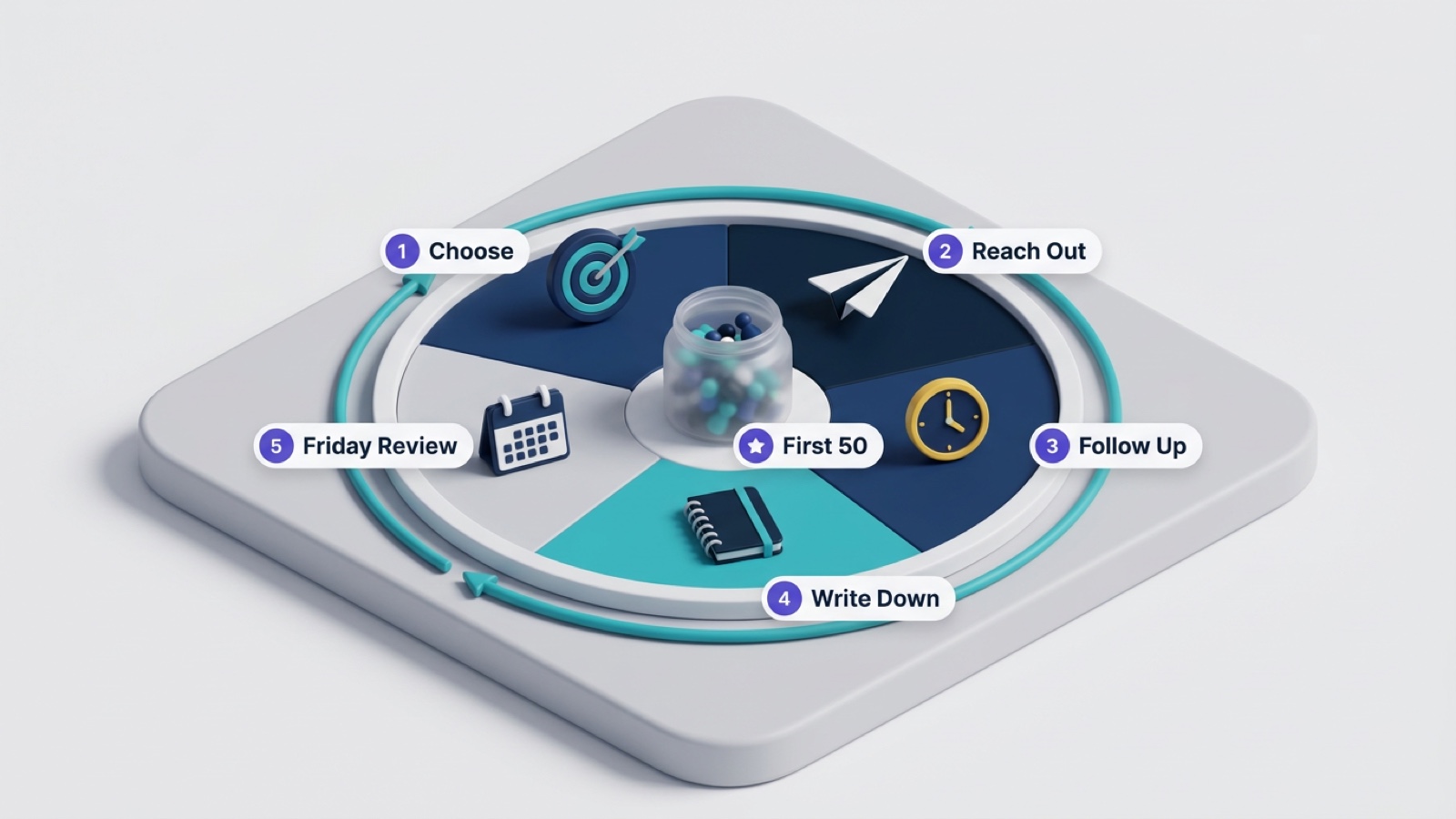
One loop, repeated every week, beats a burst of outreach followed by a month of silence. Five steps:
- Monday, choose the list. Pick the people you will contact this week. A short list you finish beats a long list you abandon.
- Tuesday and Wednesday, reach out. Send the emails, LinkedIn messages and calls for that list. Keep each message short and specific to the person.
- Thursday, follow up. Open everyone who replied, everyone who read and went quiet, and everyone from last week with no answer. Follow-ups close more deals than first messages, and they are the step founders skip.
- Every day, log. After each conversation, write who, what was said and the next step with a date. Two minutes right after the call is cheaper than a week of memory.
- Friday, review. Count what happened: people contacted, replies, calls held, deals moved, deals lost. Write one change for next week.
| Day | What you do | What you have at the end |
|---|---|---|
| Monday | Choose the people to contact | A list of names with one reason each |
| Tuesday and Wednesday | Reach out by email, LinkedIn and phone | Messages sent, replies logged |
| Thursday | Follow up on replies and silence | Every open deal has a next step and date |
| Daily | Log each conversation | A record you can read cold in a month |
| Friday | Review the week's numbers | One change for next week |
How do you decide who to contact first?
Start from the ICP, then grade each company against it. A simple scale works: 5 means the company fits on every test and there is a reason to talk now (for example, a new hire in the role that buys from you). 4 means it fits on every test. 3 means it fits but one blocker could change, or you could not find the evidence. 2 means it fails one test but sits close. 1 means a named disqualifier, and you never contact it.
Contact 4s and 5s first. Write the evidence next to each grade, a link and what the page said, so the next person who disagrees can see why. Missing evidence is a 3, never a 2: a wrong 4 costs you one message, but a wrong 2 quietly removes a good company for a year.
Within a company, go to the owner or founder first. If the founder has left or sold, go to the person who runs that business, then the head of sales or marketing. Check that the person really holds the title before you write to them, because a wrong identity looks right and is hard to spot later.
What should you track from day one, and what can you skip?
Track a small set and keep it honest:
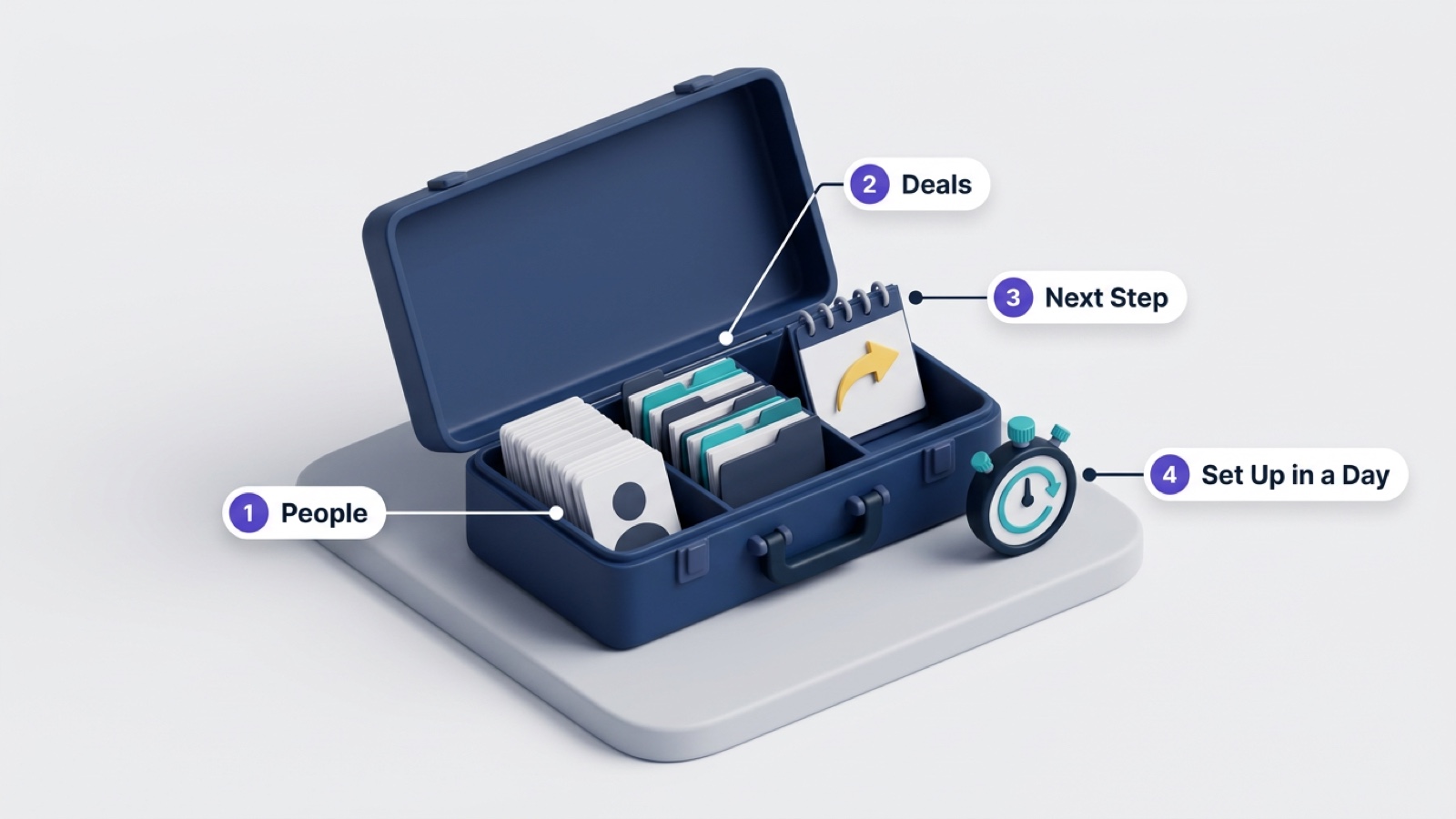
- Who: name, company, email, LinkedIn profile, phone if you have it.
- Where they came from: cold outreach, a referral, your site, an event.
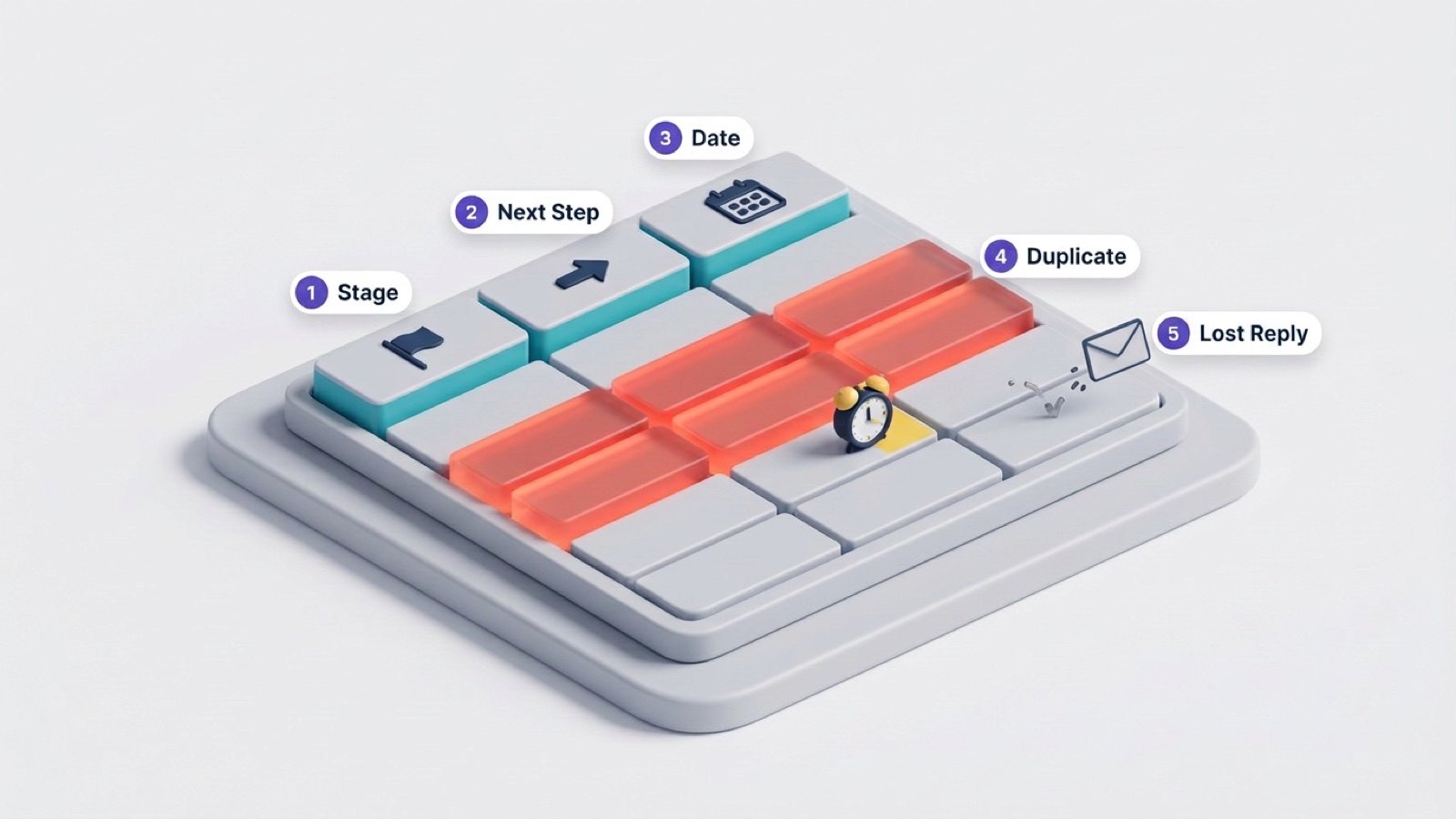
- Stage: for example lead, contacted, replied, meeting booked, proposal, won, lost.
- Next step and its date. Every open deal needs one.
- What was said, in one or two lines.
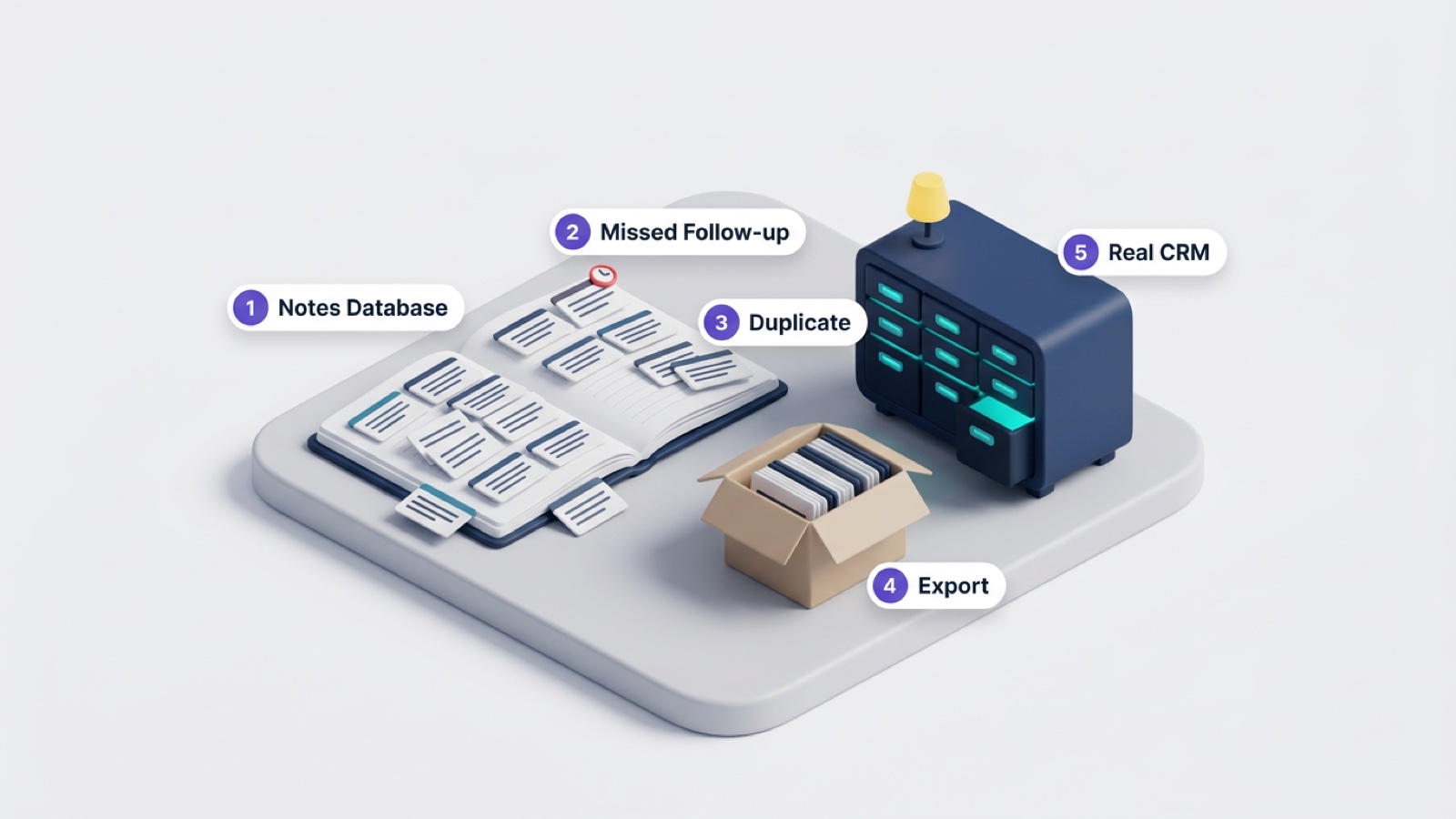
Skip forecasts, probability percentages, custom reports and automations for now. With a few dozen deals, a view of "next step is due this week" does more than a dashboard. If you track this in a spreadsheet today, our guide to a [Google Sheets CRM](/guides/google-sheets-crm) has the columns; if you use Notion, see [Notion as a CRM](/guides/notion-crm).
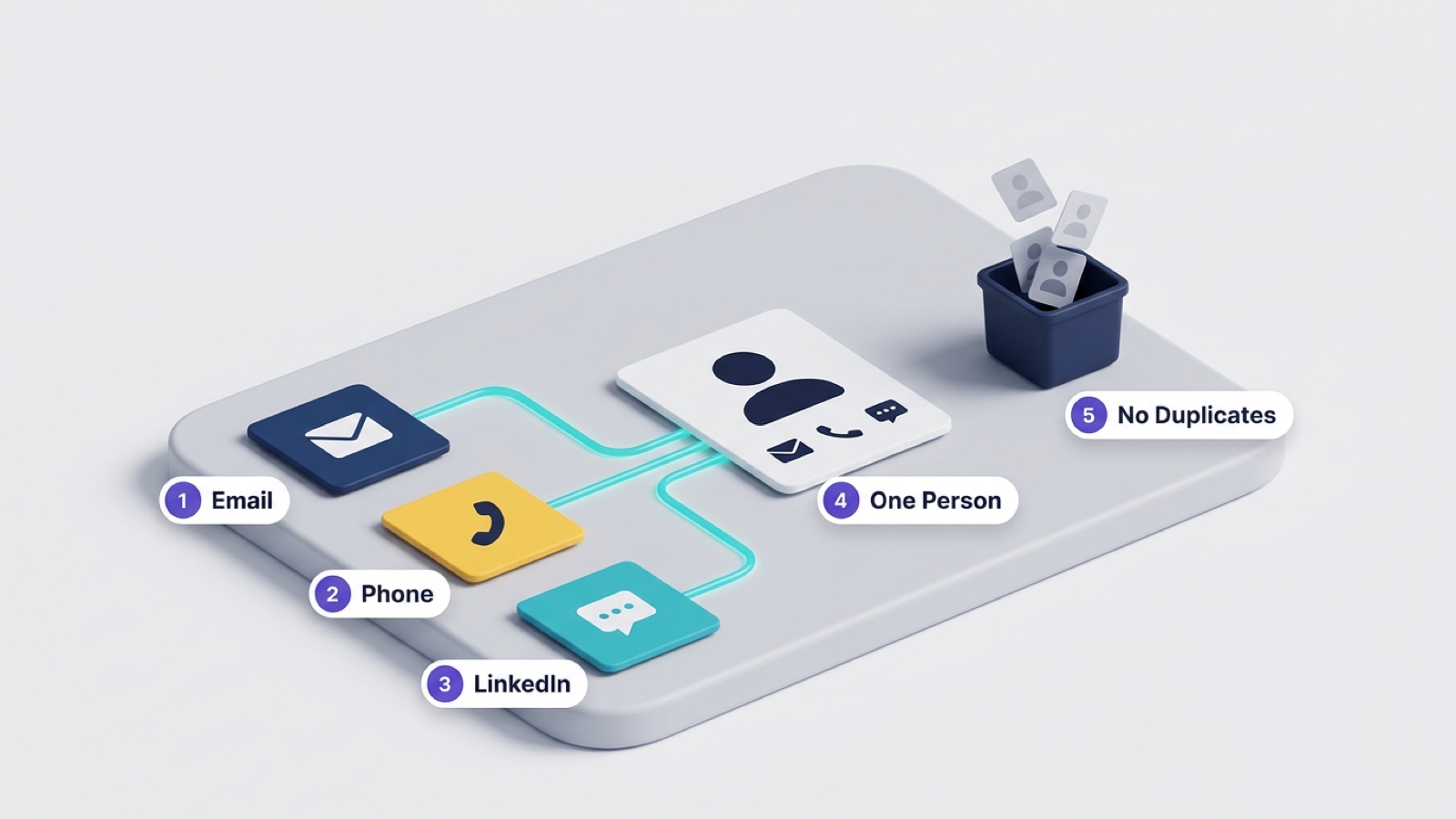
Keep one record per person. A person who has an email, a LinkedIn profile and a phone number is one person, and a second record splits the history in half. The guide to [one record per person](/guides/one-record-per-person) explains how that goes wrong.
Where can Claude do the admin so you keep the conversations?
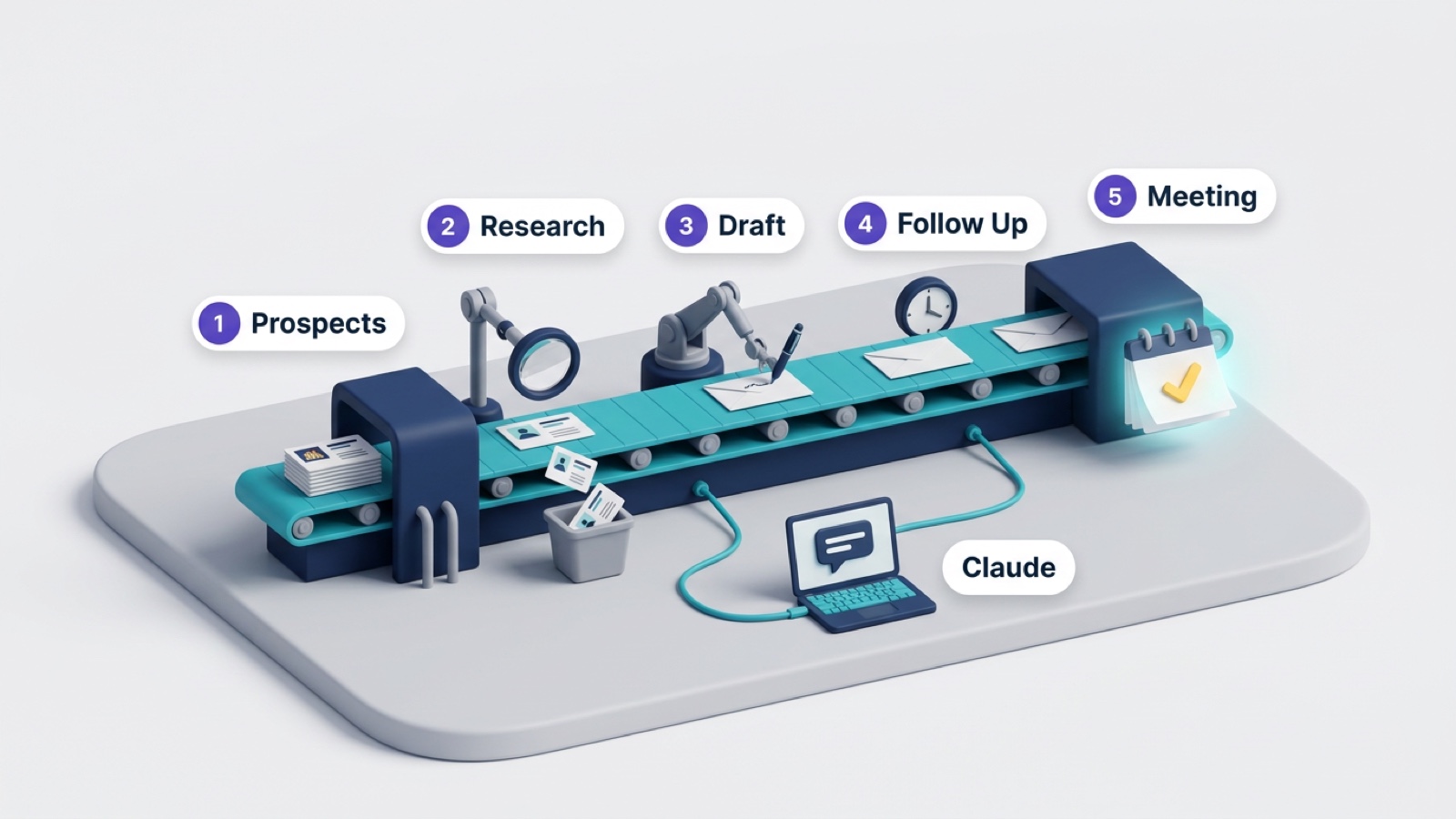
Admin is where a founder's selling week leaks. Claude can take the parts that need reading and writing but not your voice:
- Research a company against your ICP and write the grade with its evidence.
- Draft the follow-up for each open deal, which you edit and send.
- Turn your call notes into a clean record with the next step and date.
- Build Friday's review: who has no next step, who went quiet, what moved.
Keep the conversations yours: the replies, the calls and the decision to push or let go. RevyOps is a CRM built for a founder who works with Claude: Claude reads and writes the records through a connector, and each email and LinkedIn touch lands on one record per person. See [Claude for sales](/guides/claude-for-sales) for the wider picture.
When should you hire your first seller?
Hire when the work is repeatable, not when you are tired of it. Four checks:
- You can write the ICP, the pitch and the top objections with their answers on a page.
- Deals of one kind keep closing for the same reasons.
- You have more good conversations available than you have hours to hold them.
- You can describe what a good week of activity looks like, so you can tell if the hire is on track.
If one of those is missing, a hire will spend months rediscovering what you already know, or never find it. Stay in the calls a while longer and write the missing part down.
Questions people ask
What is founder-led sales?
It is the stage where the founder does the selling: finding buyers, running calls and closing deals, before a sales team exists.
How do I build a sales pipeline from scratch?
List the stages a deal passes through, record every person and deal with a next step and date, and run the weekly loop: choose, reach out, follow up, log, review.
How many customers should I close before hiring a salesperson?
There is no single number. Hire when you can write the process down and deals of one kind keep closing for the same reasons.
Do I need a CRM to start?
Not on day one. A spreadsheet works for a few dozen deals. Move when follow-ups slip or one person appears twice.
How much time should a founder spend selling each week?
Enough to finish the loop. A small loop run every week beats a large push once a quarter.
Can founder-led sales work for an agency or consultancy?
Yes. The loop is the same: a clear ICP, a short list, follow-ups and a written record.
How we compared
Each vendor detail comes from its own pages and docs, checked on 19 November 2026.
- RevyOps people and identifiers: docs.revyops.com/user-guide/people.md