
Choose RevyOps if
- You are a founder who still does the selling and already works in Claude.
- Your outbound runs through Instantly, Smartlead or HeyReach, and replies need to land on the right person.
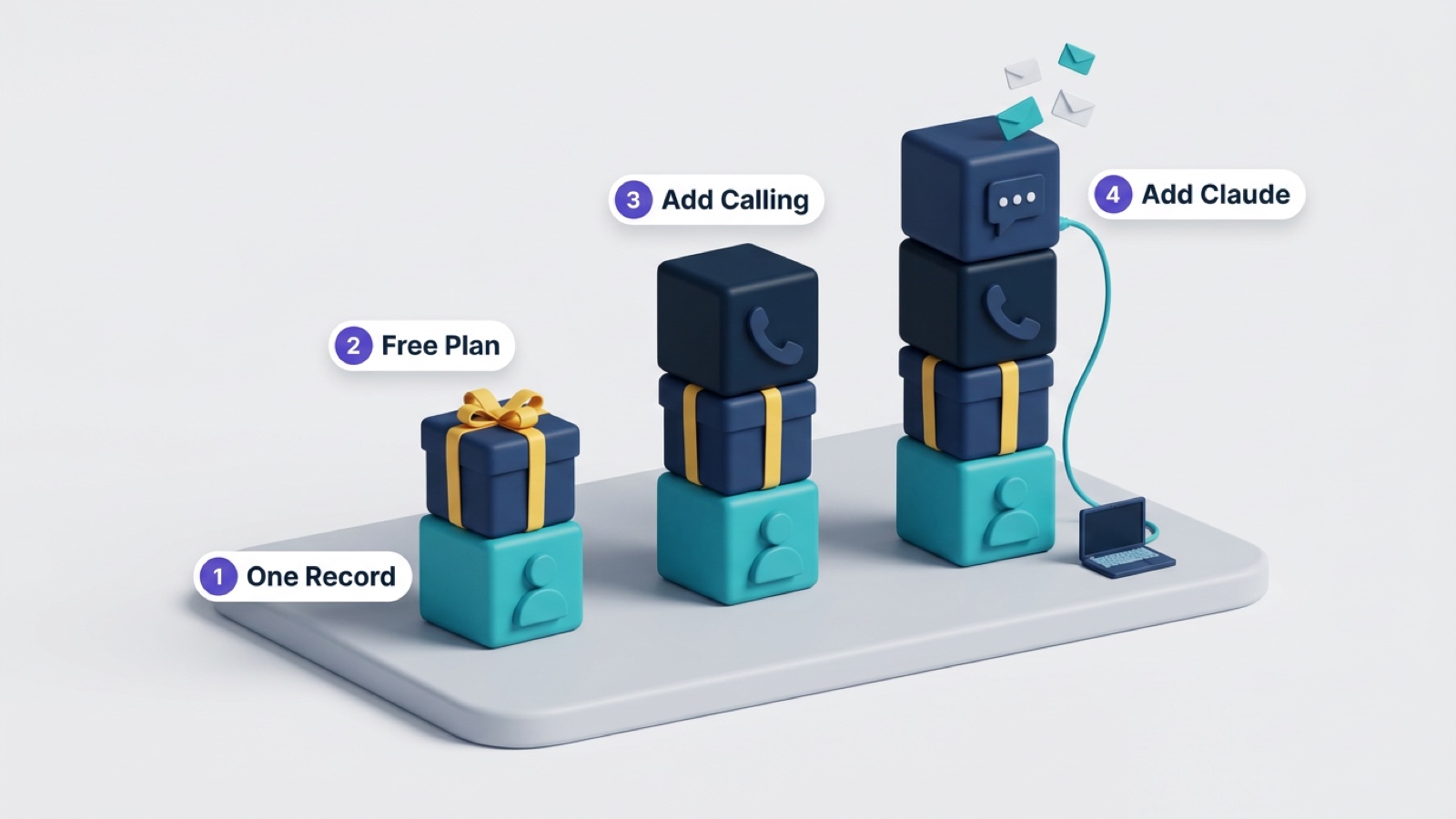
- You want to start on a free plan and skip AI credits. RevyOps launches on 26 January.
Choose HubSpot or Attio if
- You want a free plan that exists today and a CRM many advisors and hires already know.
- You want email and calendar sync from day one.
- You do not mind buying the vendor's AI as credits later.
Choose Close if
- You sell by phone, and calling, SMS and email should live in one tool.
- You have a few reps and want pipeline reports.
| CRM | Free plan | First paid price, as of 19 November 2026 | Best fit by stage |
|---|---|---|---|
| RevyOps | Yes, from launch on 26 January | Not listed here | Founder selling, outbound through sequencers, works in Claude |
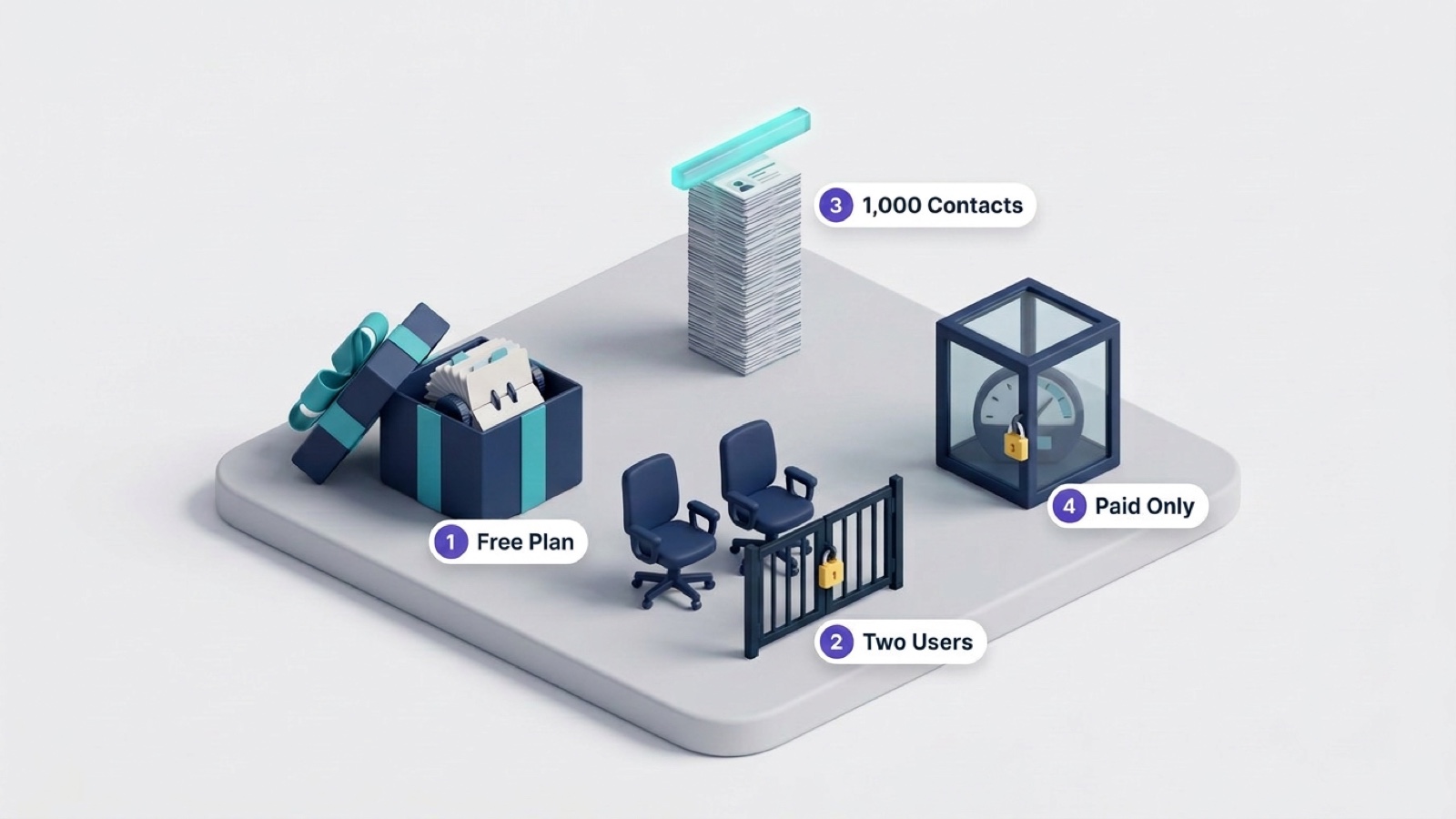
| HubSpot | Yes: 2 users, 1,000 contacts | Starter $20 a seat monthly list price; new customers see $10 monthly or $7 annual | First CRM, wants a known name |
| Attio | Yes: up to 3 users | Plus $50 monthly or $40 annual per workspace, 1 user included | Flexible data model, 1 to 10 people |
| Close | No; 14 day trial | Solo $19 monthly or $9 annual (1 user); Essentials $49 monthly or $35 annual per user | Phone-heavy outbound |
| Pipedrive | No; 14 day trial | Lite $24 monthly or $14 annual per seat; Growth $49 or $39 | Simple pipeline for a small team |
| Folk | Not listed; 2 week trial | Standard $30 monthly or $24 annual per member | Relationship-style selling |
| Day.ai | Yes | Turbo $24 a month per agent | One person who wants an AI agent to log and draft |
| Clarify | Yes: 20,000 records, 1,000 AI credits a month | Starter $50 a month, unlimited seats | Small team that wants AI meeting notes |
| Twenty | No; 30 day trial | Pro $9 per user a month billed yearly | Teams that like open source |
"Not found" means we did not find it in the vendor's own pages or docs on the date checked. It does not prove the feature is missing.
What CRM should a startup use at each stage?
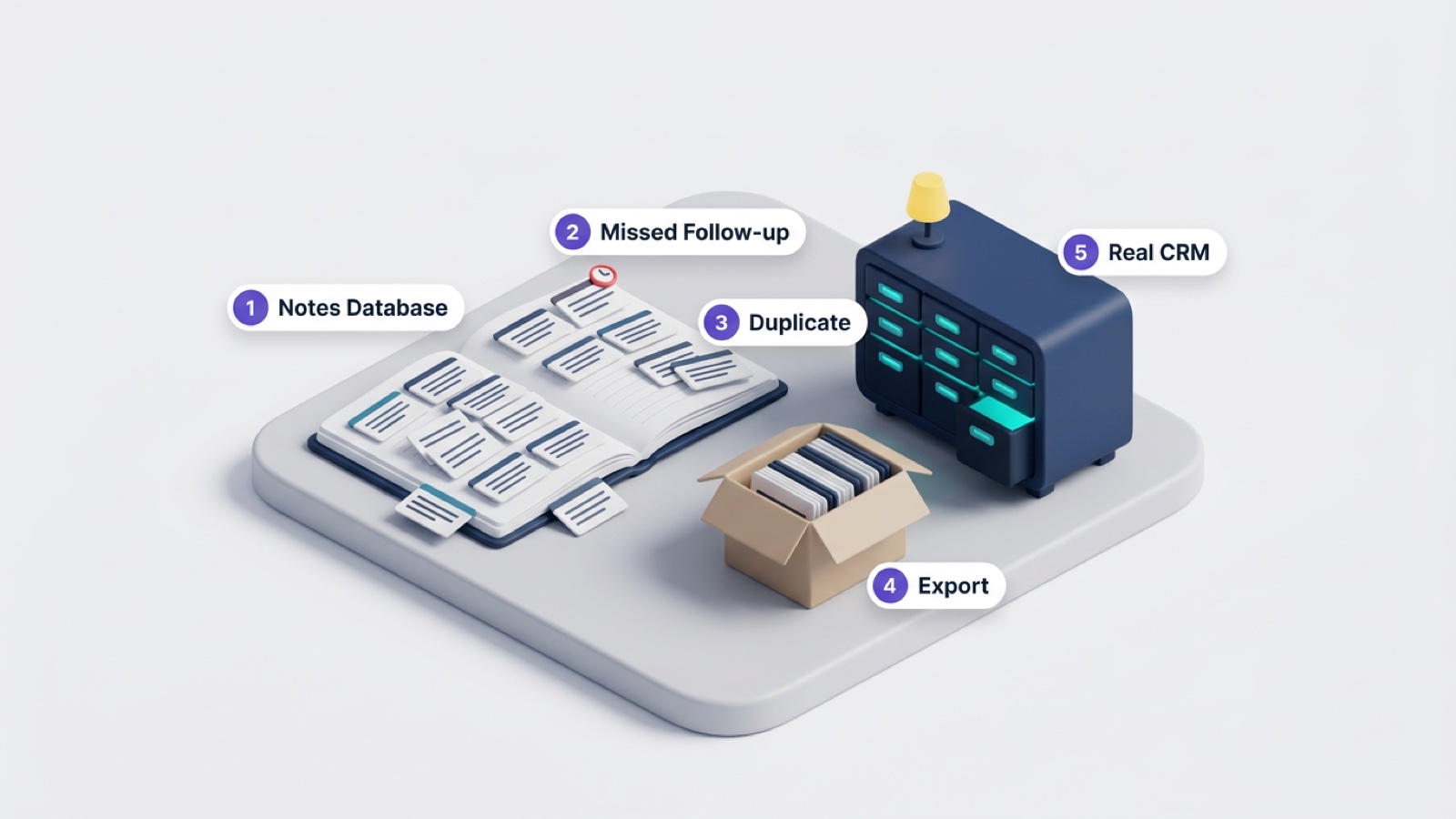
- Before your first customer. A spreadsheet or Notion is enough. Move when you lose track of who replied to what.
- One founder selling, under 100 active conversations. Use a free plan: HubSpot allows 2 users and 1,000 contacts, Attio allows 3 users, Day.ai and Clarify have free plans. Pick the one where email syncs without work.
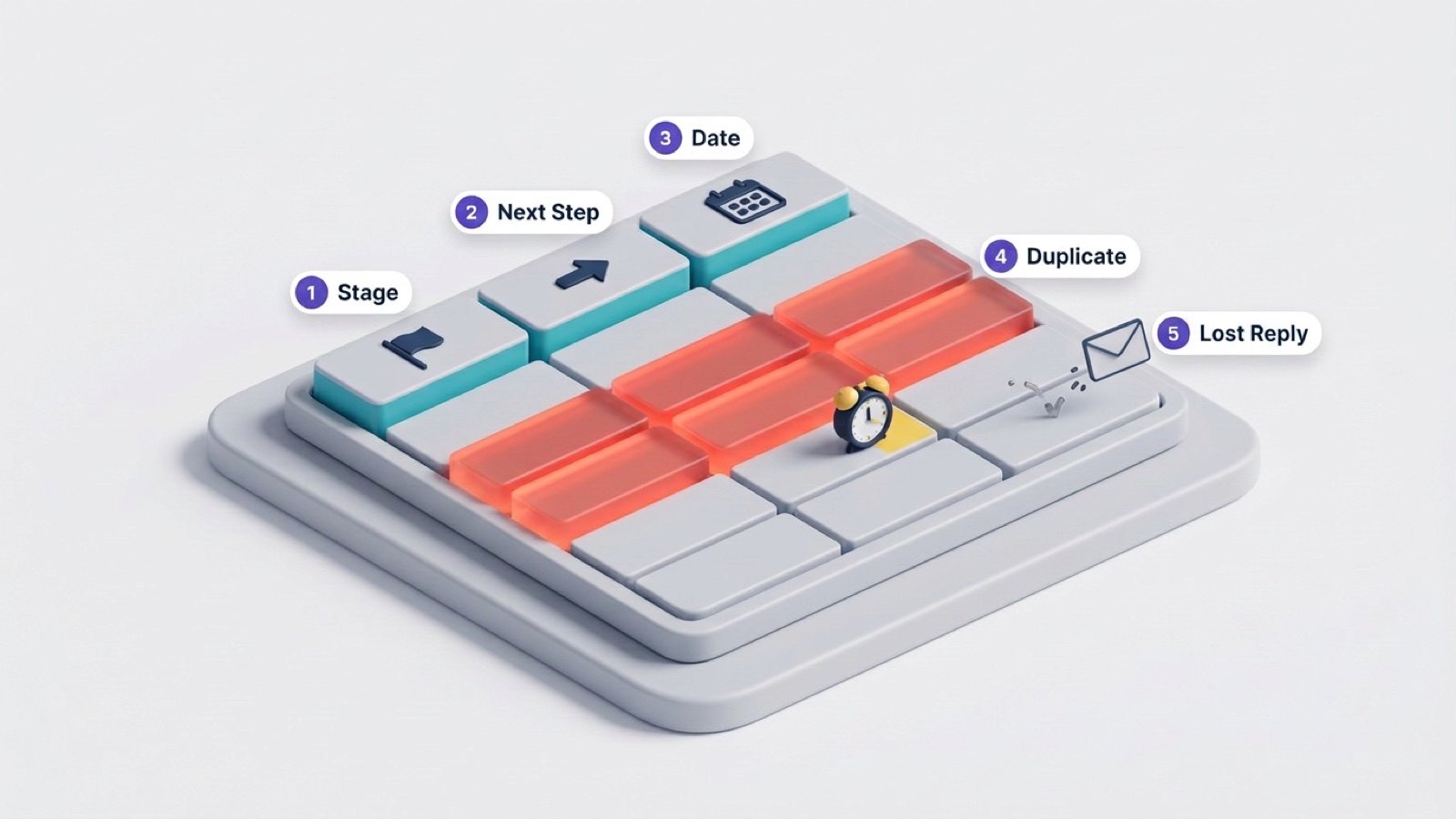
- Outbound running through a sequencer. You now need replies from cold email and LinkedIn on the person's record. Check how each CRM matches one person across email and LinkedIn before you pick.
- First sales hire. Move to a plan with team reports. Close Essentials gives unlimited users and pipeline reporting; HubSpot and Attio paid plans add seats at a per-seat price.
- Several reps and a process. This is when custom objects and automations earn their price. Close lists custom objects on Scale at $139 a user a month billed annually.
What should an outbound startup look for in a CRM?
- One record per person, across email, phone and LinkedIn. Without it, a prospect who answers on LinkedIn still gets your next cold email.
- A way to bring in sequencer activity. Ask each vendor how replies from Instantly, Smartlead or HeyReach reach the person's record, and whether any cap applies to your plan.
- Setup you can do without an admin. Claude can build views and workflows in RevyOps and Close, so the founder does not become the CRM administrator.
- A price that does not jump with seats or credits. Attio Plus includes one user in the price; Clarify has unlimited seats; Day.ai charges per agent.
Where each CRM wins
- HubSpot has the largest free offer and a brand that investors and hires know. The free plan has no time limit.
- Attio has a free plan and the cleanest way to model your own data. It has no email sequences below Pro.
- Close is the pick for phone selling. It builds in calling, SMS and email, and bills calling by the minute (about $0.02).
- Folk suits relationship-led selling and has a LinkedIn extension on its Standard plan.
- Day.ai is a low entry price for one person with an AI agent.
- RevyOps is for founders who sell with Claude. It has no meeting recording yet, no email sequences inside the CRM, and launches on 26 January.
Questions people ask
What is the best CRM for startups?
The one that fits your stage. For most founders that is a free plan from HubSpot, Attio or Day.ai. If you work in Claude and run outbound through a sequencer, RevyOps.
What is the best free CRM for a startup?
HubSpot's free plan allows 2 users and 1,000 contacts with no time limit. Attio's free plan allows 3 users. Clarify and Day.ai also list free plans.
Do startups need a CRM, or is a spreadsheet enough?
A spreadsheet works until you lose track of who replied. When two channels send to the same people, move to a CRM.
What is the best CRM for founders who sell?
One that is quick to set up and cheap to leave. A free plan, CSV import and export, and an AI that builds the setup for you.
When should a startup move off a free CRM?
When you hit a limit: users, records, or a feature such as sequences, which Attio puts on Pro.
How we compared
Each vendor detail comes from its own pages and docs, checked on 19 November 2026.
- HubSpot: hubspot.com/pricing/crm, hubspot.com/pricing/sales
- Attio: attio.com/pricing
- Close: close.com/pricing
- Pipedrive: pipedrive.com/en/pricing
- Folk: folk.app/pricing
- Day.ai: day.ai/pricing
- Clarify: clarify.ai/pricing
- Twenty: twenty.com/pricing
- RevyOps: docs.revyops.com